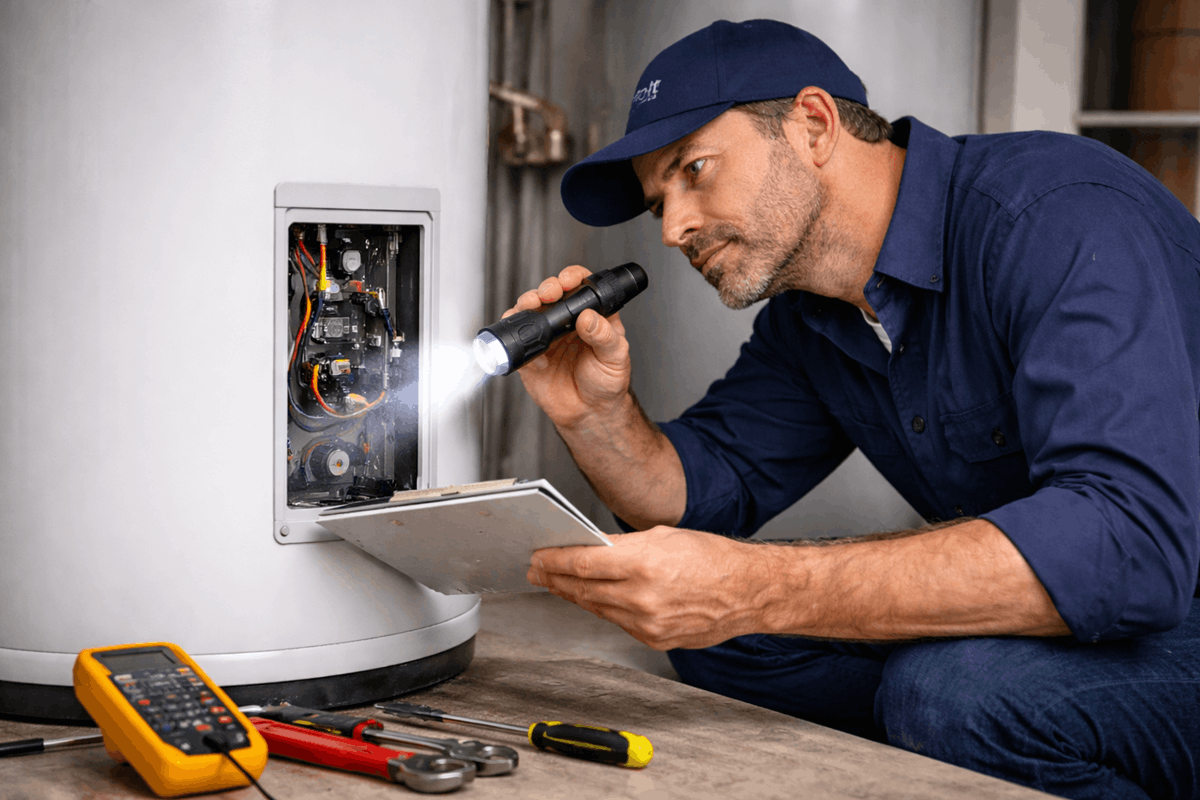
Before calling a professional, homeowners can safely troubleshoot basic water heater issues such as checking the thermostat, inspecting the power or gas supply, testing the pilot light or breaker, and looking for visible leaks. If problems persist or involve pressure, gas, or major leaks, professional service is the safest option.
Why Water Heater Problems Always Feel Urgent
Few things disrupt a home faster than losing hot water. Whether it happens during a winter morning or right before guests arrive, water heater issues create immediate stress. In Iowa homes, water heaters work harder year round, especially during colder months when incoming water temperatures drop.
The good news is that not every water heater issue requires an emergency call. Some problems have simple explanations and safe checks you can do yourself. Knowing what to look for helps you decide when a quick adjustment is enough and when it is time to call Holt Heating, Cooling, Plumbing & Electrical.
This guide walks through homeowner safe troubleshooting steps, not repairs that put your safety or equipment at risk.
Start With Safety Before Any Troubleshooting
Homeowners should only perform visual checks and basic adjustments on water heaters, avoiding any work involving gas lines, internal components, pressure valves, or electrical wiring beyond a breaker reset.
Before touching anything, keep these safety rules in mind:
- Never force valves or controls
- Never remove panels or internal components
- Never ignore the smell of gas or burning
- Never attempt repairs if water is actively leaking
If anything feels unsafe, stop immediately and call us.
Problem 1: No Hot Water at All
A complete lack of hot water is often caused by a tripped breaker, extinguished pilot light, or incorrect thermostat setting.
This is one of the most common complaints, and fortunately, it is often straightforward to diagnose.
What You Can Check Safely
- Electric water heaters: Check your electrical panel for a tripped breaker. Reset it once and see if hot water returns within an hour.
- Gas water heaters: Look through the viewing window to see if the pilot light is on. If it is out, follow the manufacturer instructions on the unit to relight it.
- Thermostat setting: Confirm the temperature setting has not been accidentally lowered.
If the breaker trips again or the pilot will not stay lit, that is a sign of a deeper issue that requires professional attention.
Problem 2: Hot Water Runs Out Too Quickly
When hot water runs out faster than normal, sediment buildup, thermostat issues, or increased household demand are often the cause.
If you still have hot water but not enough, consider recent changes in your home.
What You Can Check Safely
- Think about increased water usage, such as guests or new appliances
- Check the thermostat temperature setting
- Listen for popping or rumbling noises that may indicate sediment buildup
Sediment buildup is common in Iowa due to mineral content in water. While homeowners should not flush tanks themselves unless experienced, recognizing the symptom helps you know when to schedule service.
Problem 3: Water Is Not Hot Enough
Lukewarm water is often caused by thermostat settings, heating element issues, or sediment interfering with heat transfer.
Before assuming the unit is failing, check the basics.
What You Can Check Safely
- Verify the thermostat is set to a comfortable but safe temperature
- Test hot water at multiple fixtures
- Observe whether temperature fluctuates during use
If water never reaches the expected temperature, internal components may not be functioning properly. That is when professional diagnostics are needed.
Problem 4: Strange Noises Coming From the Tank
Popping, cracking, or rumbling noises usually indicate sediment buildup inside the tank, which reduces efficiency and stresses the system.
These sounds often occur during heating cycles. While they may not mean immediate failure, they should not be ignored.
What You Can Do
- Note when the noise occurs and how often
- Monitor whether hot water performance is declining
- Plan for maintenance before the issue worsens
Ignoring sediment issues shortens the lifespan of water heaters and increases energy usage.
Problem 5: Discolored or Rusty Hot Water
Rusty or discolored hot water often points to corrosion inside the water heater or aging internal components.
This issue typically appears only on the hot water side.
What You Can Check Safely
- Run hot water for a few minutes to see if discoloration clears
- Compare cold and hot water color
- Note whether discoloration worsens over time
Persistent discoloration is a sign the tank may be nearing the end of its service life.
Problem 6: Water Around the Base of the Heater
Water pooling around a water heater may come from condensation, a loose connection, or a failing tank, and should never be ignored.
What You Can Check Safely
- Dry the area and monitor for new moisture
- Check nearby plumbing connections for visible drips
- Look for rust or corrosion at the base
If water continues to appear, turn off the water supply and call a professional immediately. Tank leaks rarely resolve on their own.
Quick Troubleshooting Reference
| Symptom | Safe Homeowner Check | When to Call Holt |
| No hot water | Breaker, pilot, thermostat | Breaker trips or pilot will not stay lit |
| Hot water runs out | Usage changes, noises | Persistent shortages |
| Lukewarm water | Thermostat setting | No improvement |
| Strange noises | Observe and monitor | Noise increases |
| Rusty water | Compare hot vs cold | Persistent discoloration |
| Water around unit | Dry and observe | Continued leaking |
Why DIY Water Heater Repairs Are Risky
Water heaters operate under pressure and high temperatures, making untrained repairs dangerous and potentially damaging to your home.
Gas and electric water heaters involve components that require specialized tools and training. Incorrect adjustments can cause:
- Leaks and water damage
- Electrical hazards
- Gas safety risks
- Reduced system lifespan
Professional service ensures repairs are safe, code compliant, and long lasting.
When It Makes Sense to Call Holt Heating, Cooling, Plumbing & Electrical
If troubleshooting does not restore normal hot water, or if you notice leaks, recurring issues, or unusual smells or sounds, professional service is the safest next step.
Calling early often prevents emergency breakdowns and costly replacements. Holt Heating, Cooling, Plumbing & Electrical technicians diagnose issues thoroughly and explain options clearly so homeowners can make informed decisions.
Protect Your Comfort With the Right Next Step
Hot water is essential to daily comfort, especially during Iowa winters. While basic troubleshooting can help identify simple issues, knowing when to stop is just as important.
If your water heater is not performing as it should, Holt Heating, Cooling, Plumbing & Electrical is here to help. With decades of trusted service, we focus on reliable solutions that keep your home comfortable and your system running efficiently.
Let Holt handle that. Your comfort is our mission. Contact us today!