If you’ve noticed white spots on dishes, soap that won’t lather properly, dry skin after showering, or mineral buildup around faucets, hard water may be affecting your home. Hard water is a common issue throughout Iowa, including West Des Moines, where many homeowners experience the effects of elevated mineral content in their water supply.
Holt Plumbing & Heating, Inc. has proudly served West Des Moines and surrounding communities for decades, helping homeowners improve water quality, protect plumbing systems, and enjoy greater comfort at home. If you’re considering a water softener installation, understanding the costs, benefits, and installation process can help you make an informed decision.
What Is Hard Water?
Hard water contains high levels of dissolved minerals, primarily calcium and magnesium. While these minerals are not generally harmful to your health, they can create a variety of problems throughout your home’s plumbing system.
As water moves through underground rock formations, it naturally absorbs minerals. By the time it reaches your home, those minerals can leave deposits inside pipes, water heaters, fixtures, and appliances.
Many homeowners in West Des Moines don’t realize how much hard water is affecting their homes until they install a water softener and experience the difference firsthand.
How Can You Tell If You Have Hard Water?
Hard water often leaves noticeable signs throughout the home.
Common indicators include:
- White chalky residue on faucets and fixtures
- Spots on dishes and glassware
- Soap scum in tubs and showers
- Reduced water pressure
- Dry skin and hair
- Stiff laundry after washing
- Frequent appliance maintenance
- Mineral buildup around plumbing fixtures
- Water heater efficiency problems
If several of these symptoms sound familiar, a water quality test can confirm whether hard water is the cause.
Why Hard Water Is a Common Problem in Iowa
West Des Moines homeowners often experience hard water because Iowa’s groundwater naturally contains significant amounts of dissolved minerals. As groundwater passes through limestone and other mineral-rich formations, it picks up calcium and magnesium before entering municipal water systems or private wells.
While water treatment facilities ensure water is safe to drink, they do not always remove hardness minerals.
As a result, many homeowners choose to install water softeners to improve water quality and protect their plumbing systems.
What Does a Water Softener Do?
A water softener removes hardness minerals through a process called ion exchange.
As water flows through the softener’s resin tank:
- Calcium and magnesium are captured by resin beads
- Sodium or potassium ions replace those minerals
- Softened water then flows throughout the home
The system periodically regenerates by flushing accumulated minerals from the resin bed and recharging it for continued use.
This process helps eliminate many of the issues associated with hard water.
Benefits of Installing a Water Softener
Many homeowners initially install a water softener to address cosmetic issues like spots on dishes. However, the long-term benefits often extend far beyond appearance.
Longer Appliance Life
Hard water minerals accumulate inside appliances over time.
A water softener can help protect:
- Water heaters
- Dishwashers
- Washing machines
- Ice makers
- Coffee makers
Reducing mineral buildup often helps appliances operate more efficiently and last longer.
Improved Plumbing System Performance
Mineral scale can gradually build up inside pipes, reducing water flow and increasing strain on plumbing components.
Softened water helps:
- Reduce scale buildup
- Maintain water pressure
- Improve plumbing efficiency
- Lower maintenance needs
For older homes in West Des Moines, this benefit can be especially valuable.
Better Water Heater Efficiency
Water heaters are particularly vulnerable to hard water damage.
Mineral deposits accumulate on heating elements and tank surfaces, forcing the system to work harder to produce hot water.
A water softener can help:
- Improve efficiency
- Lower energy consumption
- Extend equipment lifespan
- Reduce maintenance costs
Softer Skin and Hair
Many homeowners notice personal comfort improvements after installing a water softener.
Soft water can help:
- Reduce skin dryness
- Improve hair texture
- Make soap rinse more effectively
- Minimize irritation caused by mineral residue
This is particularly beneficial during Iowa’s dry winter months when skin irritation is already common.
Cleaner Dishes and Fixtures
Hard water often leaves unsightly spots and residue on surfaces throughout the home.
Soft water helps produce:
- Cleaner dishes
- Spot-free glassware
- Brighter fixtures
- Less soap scum
- Easier bathroom cleaning
Many homeowners appreciate spending less time scrubbing mineral deposits from showers and sinks.
More Effective Cleaning
Soap and detergents perform better in soft water.
As a result, homeowners often notice:
- Cleaner laundry
- Softer towels
- Reduced detergent usage
- Better household cleaning results
The savings on soaps and cleaning products can add up over time.
How Much Does Water Softener Installation Cost in West Des Moines?
Several factors influence the cost of a water softener installation.
These include:
- System size
- Household water usage
- Water hardness level
- Installation complexity
- Existing plumbing configuration
- Additional filtration needs
- Brand and equipment quality
Typical Water Softener Cost Range
In many West Des Moines homes, professionally installed water softener systems typically range from approximately:
- $1,200 to $4,000+ for complete installation
Higher-end systems with advanced controls, larger capacities, or integrated water filtration solutions may exceed this range.
A professional water quality assessment can help determine which system best fits your home’s needs.
What Factors Affect Water Softener Pricing?
Household Size
Larger households generally use more water and require systems capable of handling higher demand.
A family of five typically needs a larger system than a household of two.
Water Hardness Levels
The harder the water, the more treatment capacity may be required.
Water testing helps determine the proper system size and configuration.
Plumbing Modifications
Some installations are straightforward, while others require modifications to existing plumbing.
Additional labor may affect overall installation costs.
Additional Water Treatment Solutions
Some homeowners choose to pair a water softener with other water treatment equipment, such as:
- Whole-home filtration systems
- Reverse osmosis systems
- Iron filters
- Sediment filters
These upgrades can improve overall water quality while increasing installation costs. Holt offers top-tier water treatment services. Just call us.
What Happens During a Water Softener Installation?
Many homeowners are surprised by how straightforward the installation process can be.
Initial Water Assessment
The process typically begins with water testing.
A technician evaluates:
- Hardness levels
- Water usage needs
- Plumbing layout
- Existing equipment
- Treatment goals
This information helps determine the best solution for the home.
System Selection
Based on testing results and household needs, the appropriate water softener is selected.
The goal is to provide sufficient capacity without oversizing the system.
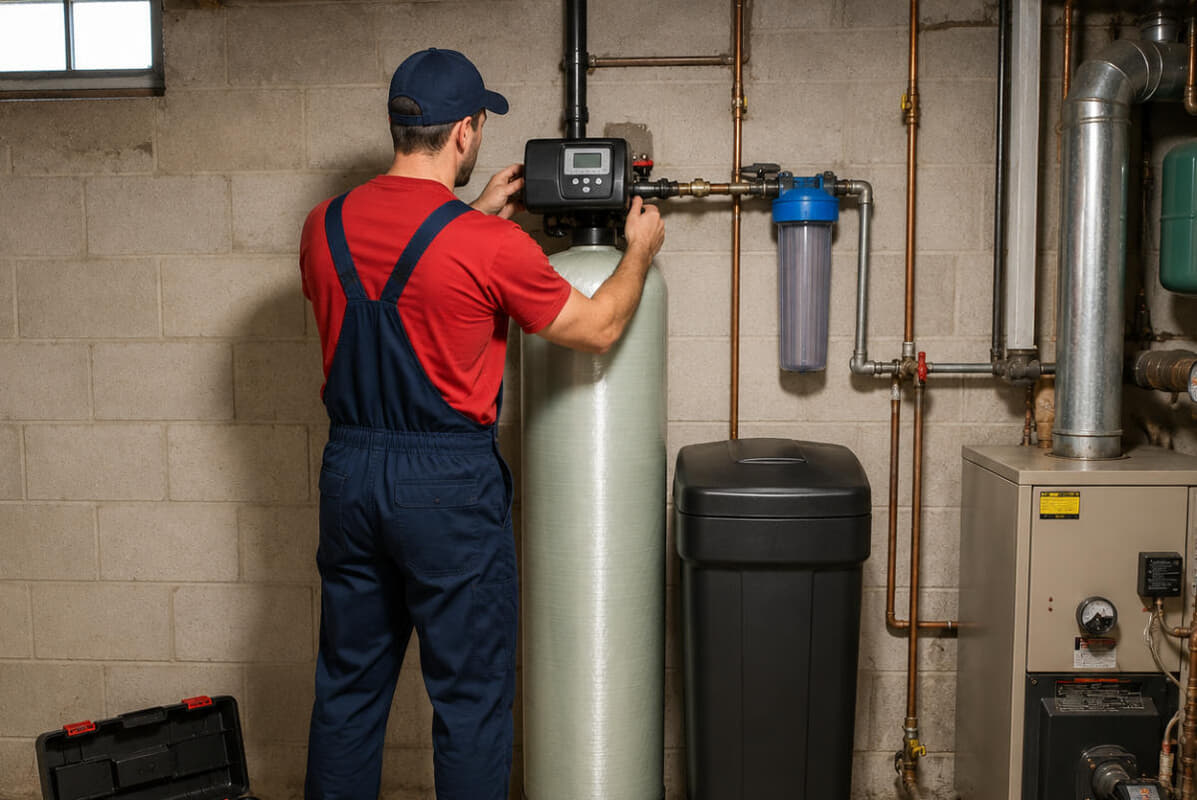
Installation Day
During installation, technicians typically:
- Shut off water service
- Connect the softener to the plumbing system
- Install bypass valves
- Configure drain connections
- Program system settings
- Test operation
Most installations can be completed within a single day.
System Testing and Education
Once installed, the technician verifies proper operation and explains:
- How the system works
- Salt replacement requirements
- Maintenance recommendations
- Expected performance improvements
Homeowners leave with a clear understanding of how to care for their investment.
How Long Does a Water Softener Last?
A professionally installed water softener can often last 10 to 15 years or longer with proper maintenance.
System lifespan depends on factors such as:
- Water quality
- Household usage
- Maintenance habits
- Equipment quality
- Installation quality
Routine inspections and maintenance help maximize performance and longevity.
What Maintenance Does a Water Softener Require?
Fortunately, maintenance is relatively simple.
Most homeowners need to:
Monitor Salt Levels
The brine tank should contain adequate salt to support regeneration cycles.
Checking salt levels every month is a good habit.
Clean the Brine Tank Periodically
Over time, salt bridges or buildup can develop inside the tank.
Periodic cleaning helps maintain efficient operation.
Schedule Professional Service
Routine inspections can identify minor issues before they affect performance.
Professional maintenance helps ensure long-term reliability.
Should You Install a Water Softener If You Have City Water?
Many homeowners assume water softeners are only necessary for homes with private wells. In reality, hard water can affect both well water and municipal water supplies.
Even if your water is treated by the city, hardness minerals may still be present.
A water quality test is the best way to determine whether a softener could benefit your home.
Why Professional Installation Matters
Proper sizing and installation are critical to system performance.
An improperly installed water softener may:
- Waste water
- Regenerate too frequently
- Provide inadequate softening
- Increase operating costs
- Experience premature wear
Professional installation helps ensure the system delivers the performance and efficiency homeowners expect.
Why Choose Holt Plumbing & Heating for Water Softener Installation?
West Des Moines homeowners trust Holt Plumbing & Heating because of the company’s long-standing commitment to quality workmanship, honest recommendations, and exceptional customer service.
When you work with Holt, you benefit from:
- Decades of local experience
- Licensed and insured technicians
- Professional water quality evaluations
- Expert installation practices
- Transparent communication
- Reliable plumbing solutions
- Ongoing support after installation
Whether you’re dealing with hard water, appliance scaling, or concerns about water quality, Holt can help you find the right solution for your home.
Improve Your Home’s Water Quality with Holt Plumbing & Heating
Hard water can affect everything from your plumbing system to your daily comfort. Installing a professionally sized water softener can help protect your investment, improve efficiency, and make everyday tasks easier.
For generations, homeowners throughout West Des Moines and the greater Des Moines area have trusted Holt Plumbing & Heating for dependable plumbing solutions. If you’re ready to learn more about water softener installation, contact our team today.
Call Holt Plumbing & Heating today to schedule a water quality assessment and discover the benefits of softer water for your Iowa home.